

Meme coins are moving beyond pure viral frenzy, showing renewed momentum driven by improved tokenomics, staking features, and NFT integrations that add measurable utility. For traders and investors this shift matters, because it changes how to distinguish transient pumps from sustainable moves. This Market Pulse piece lays out the data signals to watch, how to validate breakouts, scalp rules for short-term traders, and red flags that predict fast reversals, with up-to-the-minute examples from the PEPE and DOGE narratives and recent market coverage.
Table of Contents:
- Why meme coins are different this cycle
- Key on-chain and social signals that separate pumps from sustainable moves
- Technical validation: breakout patterns that matter for meme coins
- Short-term scalp rules for meme coin traders
- Utility integration matters: how staking and NFTs change token velocity
- Red flags that predict fast reversals
- Putting it all together: an actionable monitoring checklist
- Case studies and recent figures
- Practical recommendations for traders and investors
- Conclusion: Reading Crypto Meme Coins Using Social Volume, Staking, and Utility
Why meme coins are different this cycle
The 2025 revival of meme coins is not just another hype wave. New projects and some established names are pairing viral community growth with DeFi-style mechanics: staking, buyback and burn or redistribution tokenomics, liquidity locking, and NFT-linked utilities. Industry coverage and presale activity highlight that many modern meme projects emphasize tokenomics and staking rewards to attract longer-term holders rather than purely short-lived retail attention.
Recent press and market roundups show presales and new launches touting staged token releases, auto-liquidity mechanics, and community governance or staking benefits, all designed to reduce immediate sell pressure and reward retention.
Key on-chain and social signals that separate pumps from sustainable moves
This section defines the practical metrics and how to interpret them.
Social volume and sentiment acceleration
- What to measure: absolute social volume, rate of change in social mentions, concentration of mentions by influencers, and sentiment polarity.
- Why it matters: a controlled increase in social volume, supported by rising developer updates and product milestones, often precedes sustainable accumulation. Purely viral spikes that lack developer activity or product news often lead to quick reversals.
- Example: analysts flag PEPE when its social mindshare and exchange flows rose rapidly, but noted that lacking clear utility, the move had sustainability risk despite strong short-term price action.
On-chain flow and wallet retention
- What to measure: active addresses, new holder growth, whale accumulation, exchange inflows versus outflows, and holder retention periods.
- Practical thresholds: sustained growth in active wallets plus declining exchange inflows over several sessions suggests accumulation rather than quick flipping. Large wallet accumulation followed by distribution to exchanges signals risk of dumps.
- Recent observations: pockets of whale accumulation were observed in PEPE rallies, which helped fuel spikes; however analysts warn that without improved retention or utility, those positions can trigger sharp sell-offs.
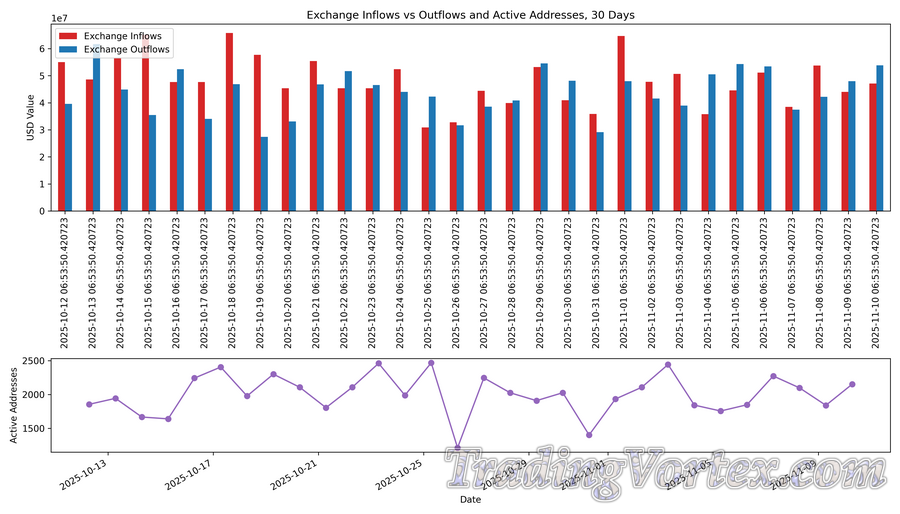 Exchange Inflows vs Outflows and Active Addresses, 30 Days: Bar chart shows cumulative exchange inflows and outflows, below it a line for active addresses.
♦ Rising inflows with stable or falling active addresses is a red flag, while falling inflows and rising active addresses suggest accumulation.
On-chain utility signals: staking, NFTs, and integrations
- What to measure: staking contract TVL, staking reward rates, staking lockup lengths, NFT utility adoption and burn/claim use cases, and integrations with wallets or DeFi rails.
- Why it matters: on-chain utility generates repeated demand and reduces circulating velocity when tokens are staked or locked, improving the chance of sustainable price appreciation.
- Evidence: the 2025 crop of meme projects frequently advertise staking rewards and NFT-linked mechanics to convert fleeting attention into token locks and community governance, shifting the market structure away from pure meme speculation.
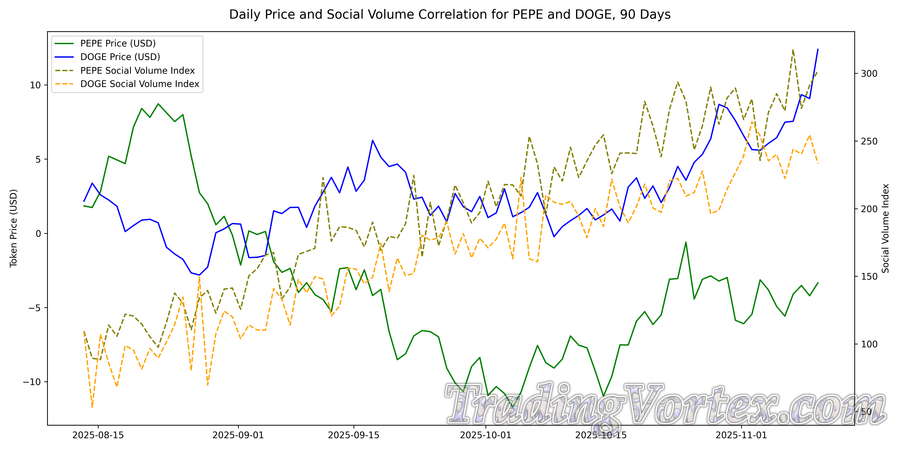 Daily Price and Social Volume Correlation for PEPE and DOGE, 90 Days: Line chart overlays token price and an indexed social volume series.
♦ Use this to observe whether price moves precede or follow social surges. A consistent rise in social mentions paired with rising price and volume supports accumulation thesis; isolated social spikes with no price follow-through indicate temporary hype.
♦ It supports the argument that price moves backed by steady social volume growth are more likely to sustain, while isolated social spikes without price confirmation often signal short-lived hype.
Technical validation: breakout patterns that matter for meme coins
Meme coin charts are volatile, yet certain technical setups on volume confirmation help filter quality moves from noise.
Breakout checklist
- Volume confirmation: breakout accompanied by above-average on-chain and exchange volume for the token, not only on derivative platforms.
- Hold retest: price retests previous resistance successfully within 1 to 5 sessions and uses it as new support, with lower volume on the retest.
- Divergence checks: RSI or MACD divergence on the breakout may signal weakening momentum.
- Orderbook depth: visible bids holding at support on major listings improves breakout credibility.
Traders should require at least two of the four conditions before assuming a breakout is tradable, because meme coins routinely produce false breakouts without adequate volume or holder backing.
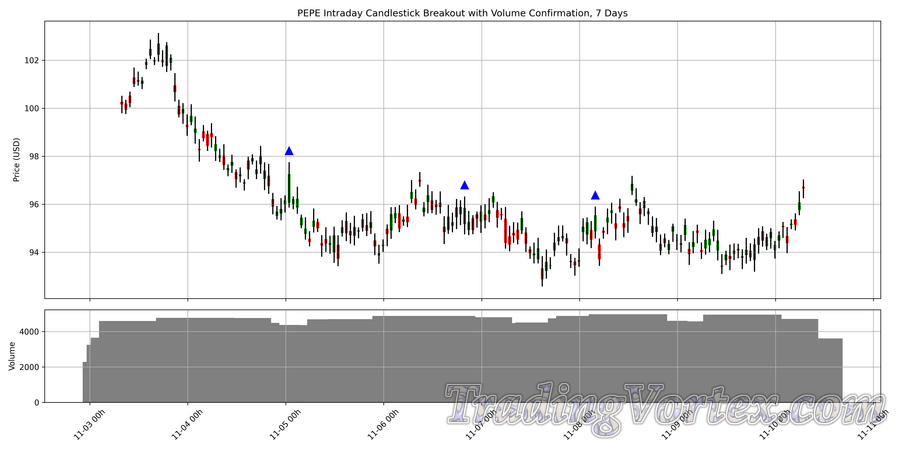 PEPE Intraday Candlestick Breakout with Volume Confirmation, 7 Days: hourly price and volume show breakout candles flagged when strong bullish closes coincide with high volume, and retests that validate or invalidate the move.
♦ What this visual shows:
◊ Price action: hourly candlesticks over the past 7 days, showing open, high, low, and close for each hour.
◊ Volume bars: hourly trading volume plotted below the price panel.
◊ Breakout markers: upward blue arrows mark candles that meet the breakout criteria: a strong bullish close relative to the open combined with elevated volume.
♦ How to read it quickly:
◊ Confirmed breakout: a large green candle with a simultaneous volume spike, followed by a lower-volume retest that holds support, suggests a higher-probability breakout.
◊ False breakout: a large candle with high volume that is quickly negated by price falling back below the breakout level, or accompanied by increasing exchange inflows, indicates a higher risk of reversal.
◊ Volume context: compare the spike height to surrounding bars; an isolated tall candle on thin volume is less reliable.
♦ Candlestick chart with volume bars highlights intraday breakout candles, followed retests, and volume confirmation. A breakout accompanied by a clear volume spike and lower-volume retest is a stronger technical validation.
Example application: PEPE and DOGE momentum
- PEPE: analysts pointed to rapid trading volume increases and whale accumulation during PEPE surges; however gaps in long-term utility and high exchange flows made many breakouts vulnerable to reversal despite strong technical setups.
- DOGE: legacy momentum often benefits from broad retail awareness and larger liquidity pools, which can make breakouts more durable; yet DOGE lacks deep staking utility, so traders still need to watch on-chain retention and macro liquidity conditions.
Short-term scalp rules for meme coin traders
Scalping meme coins demands strict rules because volatility generates both opportunity and risk. Use these rules to structure a disciplined approach:
Risk management and position sizing
- Limit position size to a small percentage of portfolio volatility budget, for example 0.5 to 2 percent per trade depending on account size and risk tolerance.
- Predefine stop loss using percentage or technical invalidation level; typical stops range from 3 to 12 percent for scalps, adjusted for liquidity and spread.
- Never risk more than a small fraction of capital on single highly-levered meme trades, because sudden dumps can wipe small accounts quickly.
Entry and exit framework
- Entry: wait for volume-confirmed breakout or a micro-range squeeze breakout with upward volume spike, plus a short on-chain or social confirmation signal.
- Take-profit: scale out quickly, targeting 0.5 to 5 percent gains on scalps depending on volatility. Reassess mid-trade if on-chain flows flip to exchanges.
- Trailing exit: use tight trailing stops once a scalp achieves intraday gains, because meme coins can reverse violently.
Use of limit orders and slippage controls
- Prefer limit orders when possible to manage slippage, especially on low-liquidity listings.
- Set maximum slippage thresholds on DEX trades and use smaller order slices to reduce market impact.
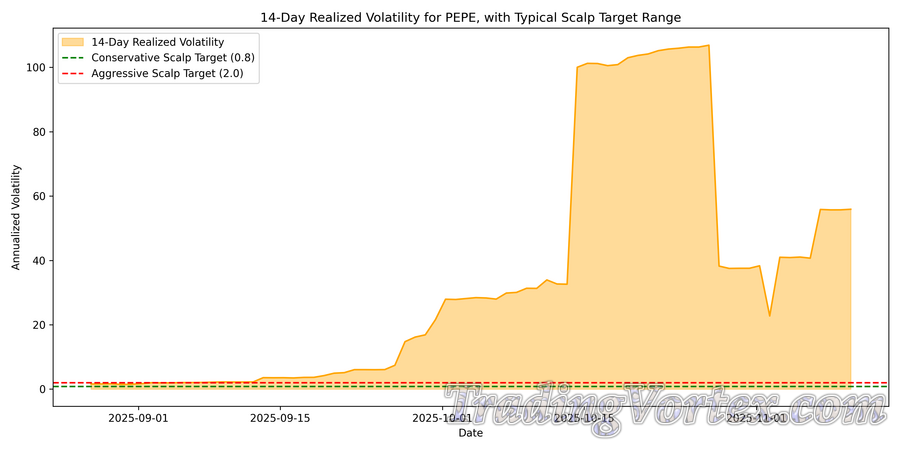 14-Day Realized Volatility for PEPE, with Typical Scalp Target Range: Area chart of realized volatility with horizontal references for conservative and aggressive scalp target bands.
♦ Use it to set dynamic scalp targets and stop ranges based on current volatility regime.
📊 Chart Overview:
◊ X-axis: Date (past 90 days)
◊ Y-axis: Annualized volatility
◊ Orange area: 14-day rolling realized volatility based on simulated daily returns
◊ Green dashed line: Conservative scalp target (0.8)
◊ Red dashed line: Aggressive scalp target (2.0)
🔍 How to Use This Chart:
◊ Volatility regime: Helps traders assess whether PEPE is in a low or high volatility phase.
◊ Scalp calibration: Use the volatility level to size stop-loss and take-profit targets. For example, if volatility is near 1.5, expect wider price swings and adjust your trade parameters accordingly.
◊ Risk management: Reduce position size when volatility exceeds the aggressive threshold to avoid overexposure
Utility integration matters: how staking and NFTs change token velocity
The emergence of staking and NFT integrations in meme token models affects circulating supply and holder incentives.
How staking reduces selling pressure
- Locked tokens in staking contracts reduce free float, lowering immediate selling pressure, while staking rewards provide yield to holders who might otherwise flip.
- Key metrics to watch: staking TVL as percentage of market cap, average lock duration, and unstaking rate after reward distributions.
- Market reports show newer meme projects push staking features into presales and launch phases to attract longer-term participants.
NFT utilities and cross-product demand
- NFTs tied to token mechanics create alternative demand vectors: claimable NFTs that require token burns, NFT staking for additional yields, and NFT-gated access to token governance or revenue shares.
- When NFTs provide recurring utility or cross-product benefits, they can convert cultural engagement into protocol-level value.
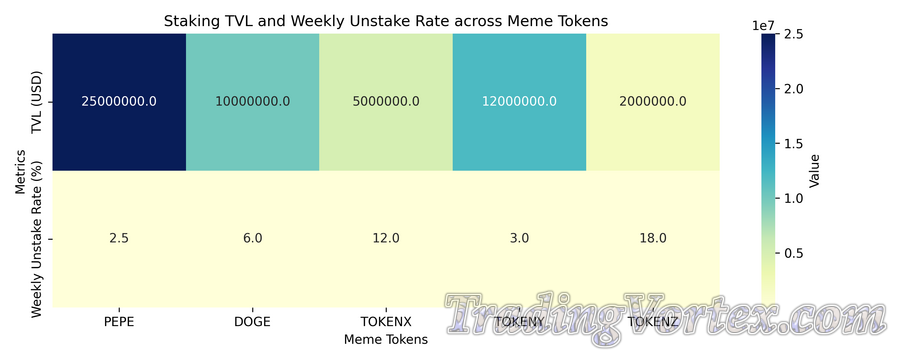 Staking TVL and Weekly Unstake Rate across Meme Tokens: Heatmap comparing staking TVL and weekly unstake rates across a set of meme tokens.
♦ High TVL with low unstake rate is favorable; low TVL or high unstake rate indicates weak staking durability.
♦ What the heatmap shows: TVL, in USD, and weekly unstake rate, in percent, displayed for five meme tokens: PEPE, DOGE, TOKENX, TOKENY, TOKENZ.
♦ How to read it: Higher TVL values appear in darker blue tones, lower TVL in lighter tones; higher unstake rates appear in contrasting shades allowing quick comparison. Look for tokens with high TVL and low unstake rate, they are structurally more stable. Tokens with low TVL and high unstake rate carry higher selling risk.
♦ Key takeaways from this dataset: PEPE shows the highest staking TVL with a very low weekly unstake rate, which suggests better staking durability in this sample. TOKENZ shows a high unstake rate with low TVL, a combination that signals weak staking fundamentals.
Red flags that predict fast reversals
Watch these warning signs closely, because they often precede vicious sell-offs.
- Spike in exchange inflows from large wallets within a short time window, indicating prospective dumps.
- Social volume dominated by paid promotions or sudden influx of low-quality bot-generated posts, versus organic community growth.
- Short-term divergence between price and on-chain holder retention: price up while retention and active addresses drop.
- Token distribution heavily concentrated in a few wallets or the team, without transparent vesting or locking schedules.
- Unusually high staking reward rates coupled with instant unstaking on reward payout days.
Analysts repeatedly flagged these patterns in coverage of rapid PEPE movements, cautioning that social and whale-driven spikes can produce quick reversals when utility and retention are weak.
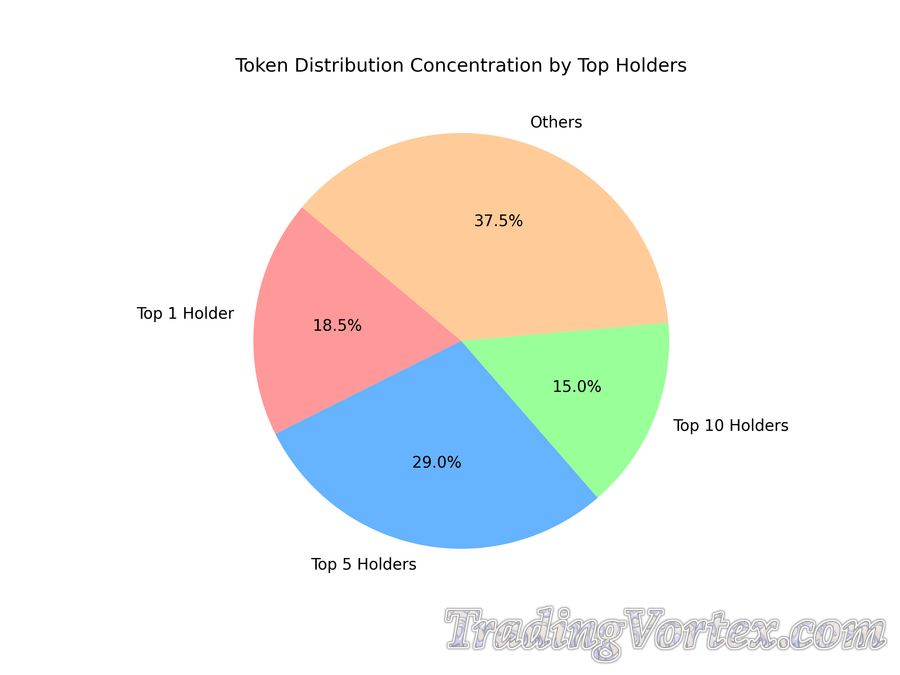 Token Distribution Concentration by Top Holders: Pie chart showing percent ownership by top wallets.
♦ Heavy concentration increases dump risk; a more even distribution suggests lower single-point liquidation risk.
Putting it all together: an actionable monitoring checklist
Use this checklist as your daily Market Pulse for meme coin evaluation:
- Social volume: is it rising steadily or spiking in a single session? Check rate of change and influencer concentration.
- On-chain flow: are exchange inflows increasing or decreasing? Are active addresses growing?.
- Staking metrics: TVL, lockup durations, and unstake patterns.
- NFT signals: mint activity, burn-to-claim dynamics, and marketplace trades.
- Technical validation: volume-confirmed breakout plus at least one retest success and healthy orderbook depth.
- Distribution risk: top holders concentration and vesting transparency.
- Macro context: overall crypto liquidity, BTC direction, and risk appetite in wider markets.
Case studies and recent figures
This section synthesizes recent reporting and analysis to illustrate how the signals play out in practice:
- PEPE: recent short-term rallies showed high social mindshare and rapid exchange volume increases; analysts noted meaningful whale accumulation yet flagged limited utility and retention, making many of the moves vulnerable to reversal after quick price ramps.
- New meme presales and launches: several 2025 presale projects reported strong fundraising and early staking or staged liquidity mechanisms, positioning tokenomics as a central narrative to attract longer-term holders rather than purely speculative retail demand.
- Coverage summaries: market guides and editorial lists highlight MoonBull, BullZilla, and a new crop of meme projects that emphasize staking, NFT linkages, and tokenomics as pillars of durability for their ecosystems.
Practical recommendations for traders and investors
- For traders: demand dual confirmation before trading breakouts, require on-chain accumulation or staking growth plus exchange volume, use tight risk controls, and size positions conservatively for scalp trades.
- For investors: focus on projects with transparent vesting, quantifiable staking TVL, and tangible NFT or product integrations that create repeat utility and token sinks.
- For portfolio managers: treat meme allocations as high-beta exposure, rebalance frequently, and schedule volatility buffers for active exposure windows.
Conclusion: Reading Crypto Meme Coins Using Social Volume, Staking, and Utility
Meme coins are accelerating smarter in 2025 by combining viral community dynamics with on-chain mechanics such as staking, staged tokenomics, and NFT utility. This change does not eliminate risk, however it provides new, measurable signals to distinguish fleeting pumps from potentially sustainable moves.
- Traders should require volume-confirmed technical breakouts plus social and on-chain validation, use disciplined scalp and risk rules, and watch the specific red flags that predict fast reversals.
- Investors should prioritize projects with transparent token distribution, real staking adoption, and NFT or product integrations that reduce token velocity.
By tracking social volume, wallet retention, and utility signals together, market participants can make more informed decisions in a meme coin market that is becoming increasingly sophisticated.